

If your grinder is sticking, clumping cannabis into uneven pieces, or generally not performing the way it used to, the cause is almost always built-up resin and trapped plant matter. The good news: cleaning a grinder takes about five minutes when done regularly, and around thirty when it has been neglected for a while.
This guide covers both versions. The quick clean is the weekly maintenance routine for grinders that are still functional. The deep clean is the alcohol-bath process for grinders that have stopped performing properly. The freezer technique near the end is the addition that makes the deep clean significantly more effective.
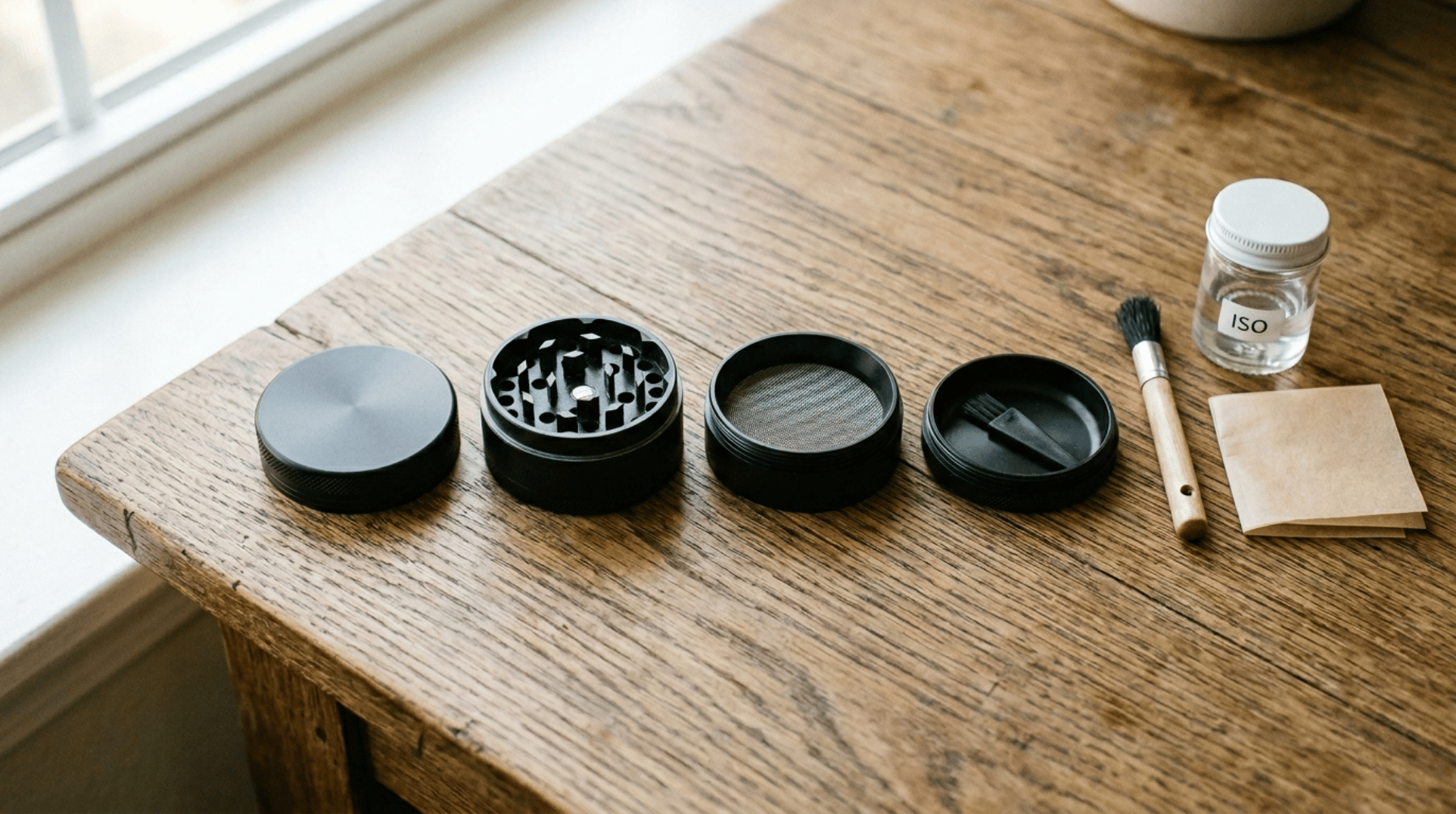
The 3-step quick clean (weekly maintenance)
For a grinder that is slightly sticky but still functional, the routine below is sufficient. It takes three to five minutes and prevents the kind of buildup that eventually requires a full deep clean.
- Disassemble and tap out Take the grinder apart and tap each piece firmly onto a sheet of parchment paper or a rolling tray. The objective is to collect any kief that has accumulated.
- Brush the residue Use a small toothbrush to sweep out residue from the teeth, the screen, and the inner corners of each chamber.
- Wipe and reassemble Wipe each piece down with a dry cloth, transfer the collected kief into a small storage jar, and reassemble.
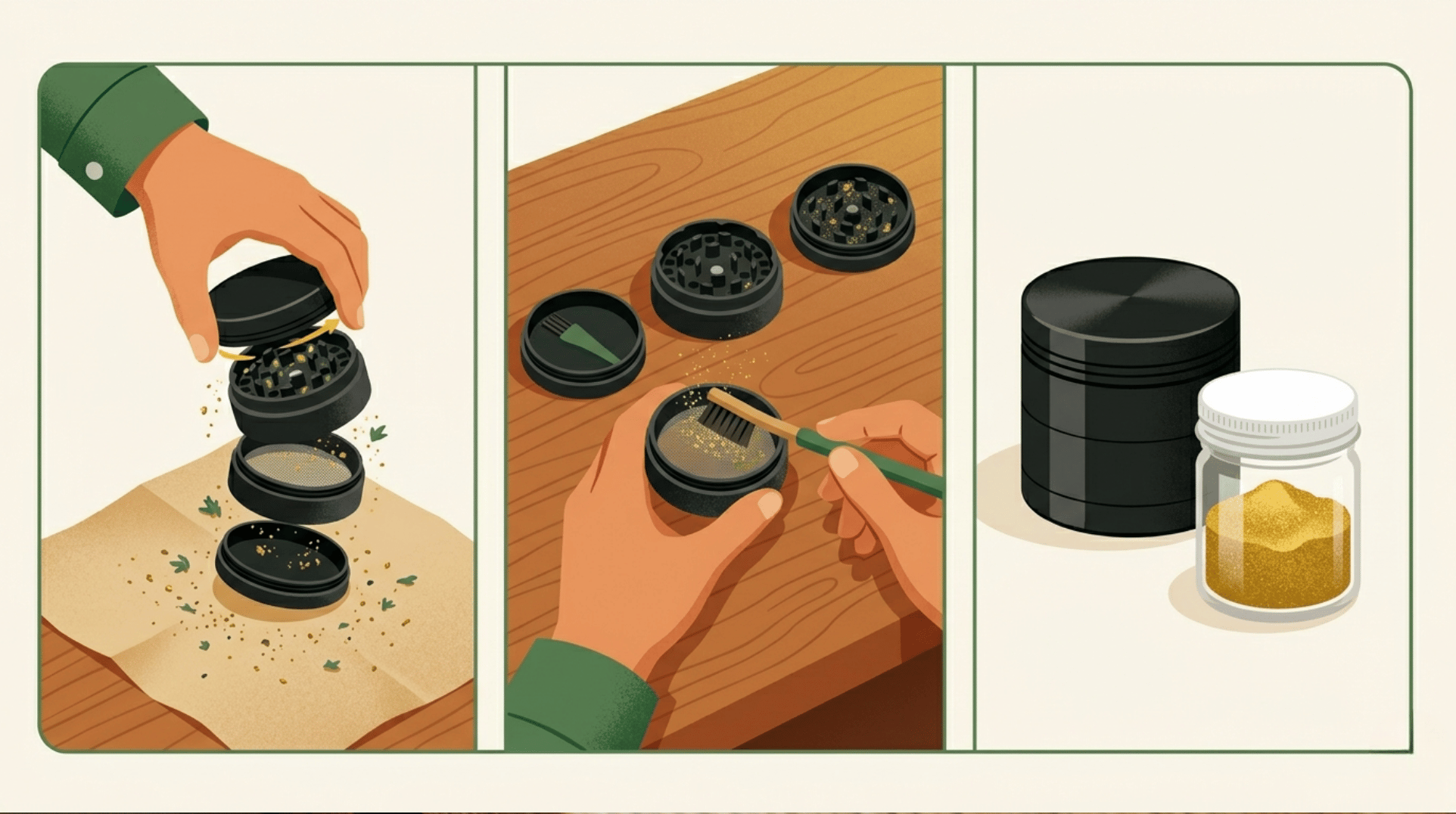
If the grinder is still sticking after this routine, the buildup has progressed beyond what brushing alone can address. The deep clean below is the appropriate next step.
What you’ll need
Most of the supplies for a deep clean are common household items.
- Isopropyl alcohol (90% works fastest; 70% is also acceptable)
- A toothbrush dedicated to cleaning
- A toothpick or paperclip for tighter spots
- A small container or sealable plastic bag
- Parchment paper or a rolling tray
- A small jar for storing collected kief
- A dry towel
- Optional: access to a freezer (covered in section 04)
The deep clean (the alcohol method)
This is the procedure for grinders that are no longer responding to weekly maintenance. Plan for thirty to forty-five minutes total, the majority of which is passive soaking time.
Step 01 Disassemble and tap out the loose material
Unscrew each piece: the lid, the top grinding chamber, the collection chamber, and the kief catcher if applicable. Lay the pieces out on parchment paper to keep everything organized. Tap each piece upside down to release any plant matter and kief that comes loose on its own. Inspect the screen at this stage. If it is torn or warped, plan to replace it after this clean rather than attempting to restore it. Mesh screens are delicate and respond poorly to aggressive handling.
Step 02 Save the kief before the alcohol bath
The fine powder collected from the parchment is mostly kief: trichomes that fell off during grinding. This material is concentrated and worth preserving. Use the toothpick or a small dab tool to transfer it carefully into a small jar. Kief can be used to top a bowl, added to a joint, sprinkled on a pre-roll, or accumulated over time and pressed into hash. This step must be completed before the alcohol bath, since alcohol dissolves anything not collected in advance.
Step 03 Soak the metal pieces in isopropyl alcohol
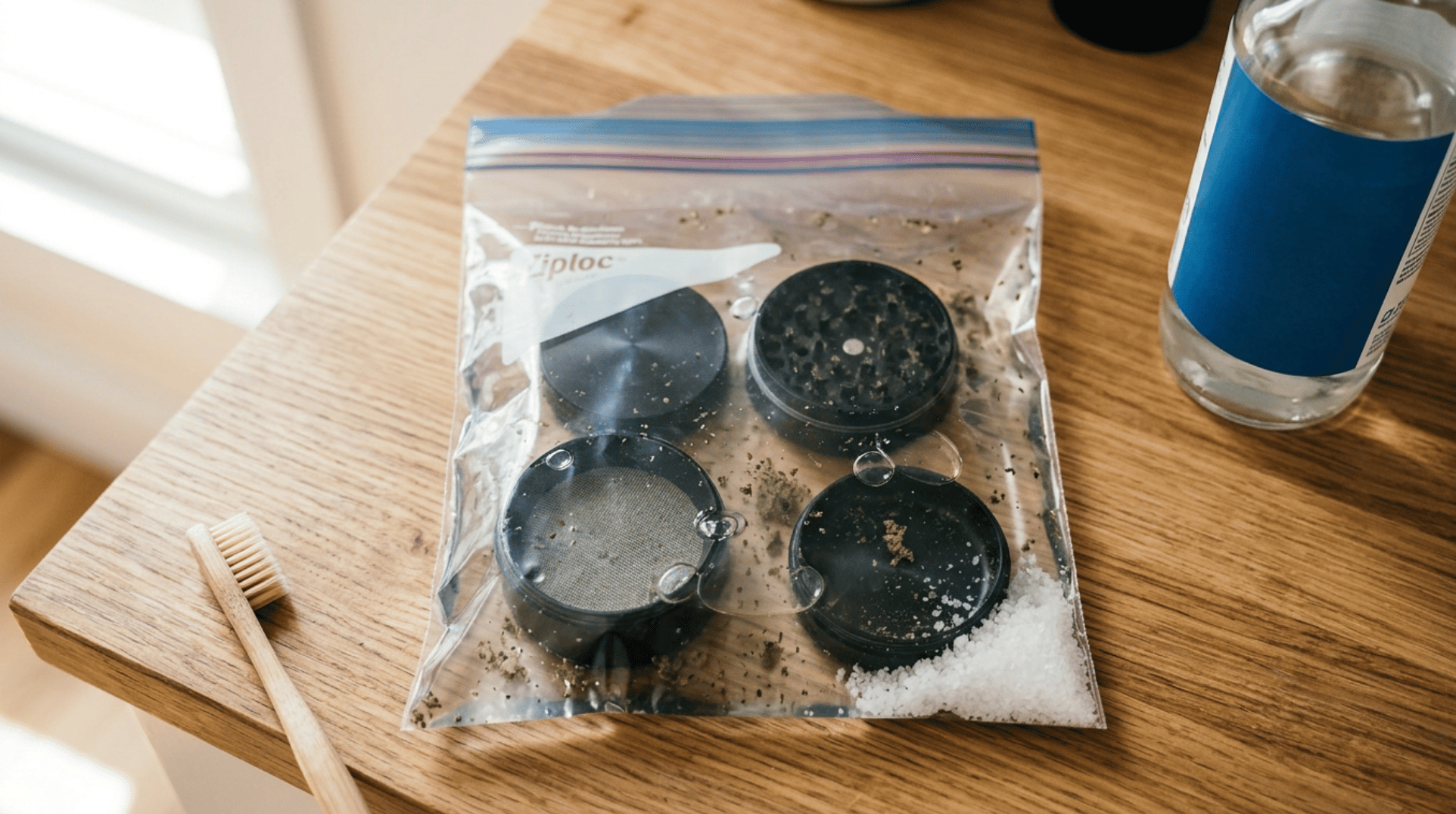
Place the metal pieces of the grinder into a sealable plastic bag or small glass jar. Cover them completely with isopropyl alcohol. Allow them to soak for twenty to thirty minutes. For grinders with severe buildup, an overnight soak is acceptable, since alcohol does not damage the metal. To accelerate the process, add a pinch of coarse salt to the bag and shake gently for thirty seconds. The salt acts as a physical scrubbing agent while the alcohol dissolves the resin.
Avoid soaking mesh screens in alcohol. The alcohol does not damage the mesh itself, but extended soaking can warp the surrounding frame. Brush the screen separately under warm water instead. Plastic and wooden grinders should also skip this step entirely. See section 06 for the appropriate handling of those materials.
Step 04 Scrub, rinse, and dry
Remove the pieces from the alcohol and use the toothbrush to scrub any remaining residue. Pay particular attention to the teeth and the threads where the parts screw together. Use a toothpick to dislodge any material caught between teeth where the brush cannot reach. Rinse each piece under warm water to remove the alcohol residue. Pat dry with a towel, then lay the pieces out to air-dry for at least thirty minutes. Moisture trapped inside a closed grinder leads to rust on metal and mould on cannabis, both of which compromise the equipment and the product.
Step 05 Reassemble
Once each piece is fully dry, reassemble the grinder. The first grind after a deep clean produces a noticeably more even result: the teeth bite cleanly, the chambers turn smoothly, and cannabis grinds without clumping. Performance returns to what it was when the grinder was new. The cleaning routine can then resume on a regular maintenance schedule.
The freezer technique (for severely neglected grinders)
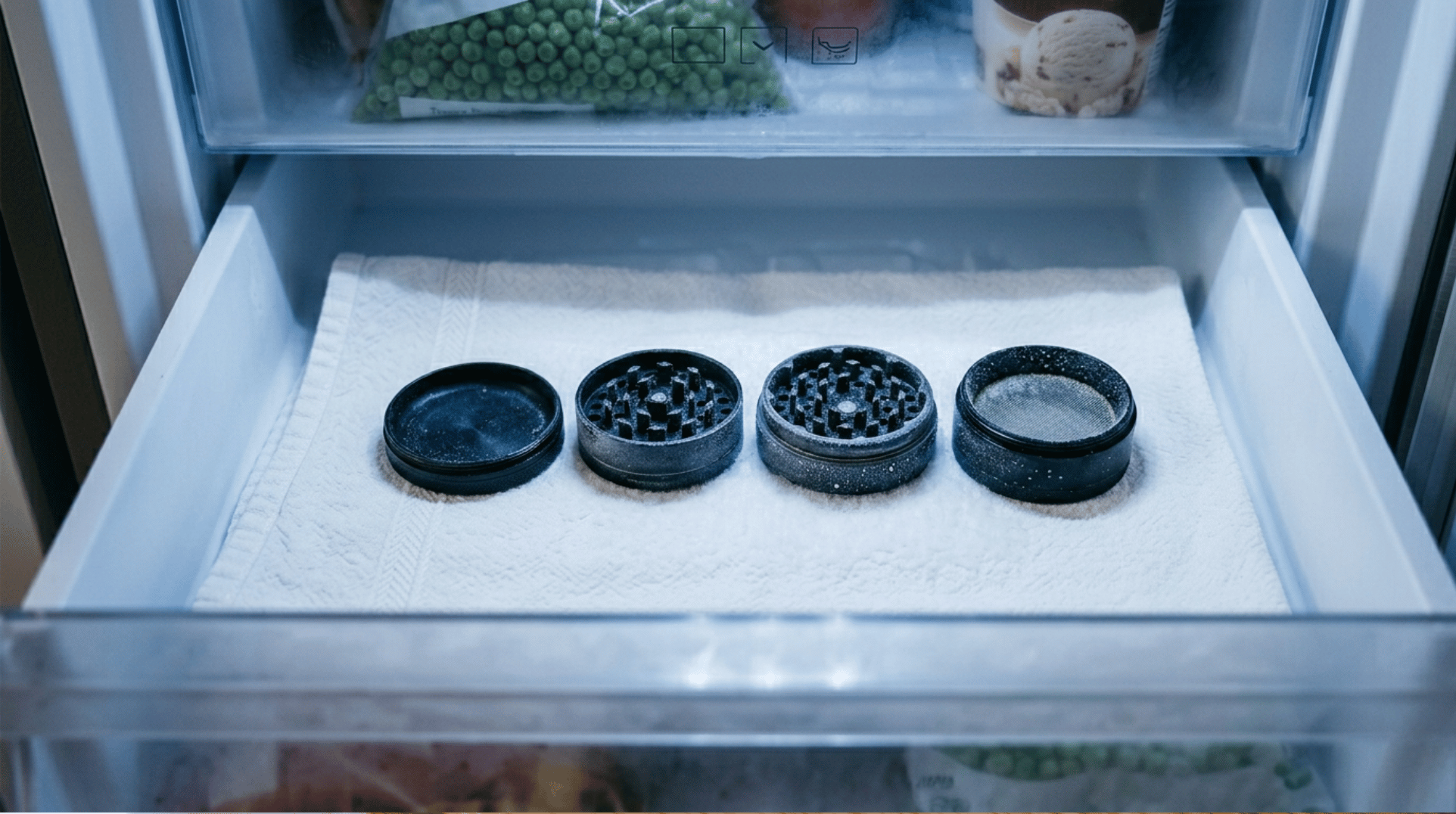
For grinders with substantial accumulated resin, freezing the disassembled pieces for thirty minutes before cleaning produces a measurable improvement. The cold causes the sticky resin to become brittle, allowing it to flake off when brushed rather than smearing. Combined with the alcohol soak, this approach restores even severely neglected grinders to functional condition. The freezer step also makes kief collection more efficient, since cold separates trichomes more cleanly from the screen.
Plastic and wooden grinders
The procedures above apply primarily to metal grinders, which are the most common. Plastic and wooden grinders require different handling.
Skip the alcohol soak entirely. Some plastics react to isopropyl alcohol and may crack, cloud, or weaken structurally. Use warm water with a small amount of dish soap instead. Brush each piece, rinse thoroughly, and allow to dry completely before reassembly. The remaining steps are otherwise identical to the metal procedure.
Avoid liquid soaks of any kind. Wood absorbs moisture and warps, often resulting in damage that exceeds the cleaning benefit. Brush each piece dry, wipe the exterior with a slightly damp cloth, and allow it to air-dry overnight before reassembly. Wooden grinders are the most demanding to maintain, which is why most regular consumers eventually transition to metal.
Cleaning frequency
The appropriate cleaning frequency depends on usage intensity.
- Daily Use Deep clean once per month, with a quick clean every two weeks.
- Weekend Use Deep clean every two months.
- Occasional Use Clean when grinding performance noticeably declines.
The general principle is to clean before performance becomes noticeably affected. Deferred maintenance produces harder cleanings and wastes kief that accumulates inside an obstructed grinder.
Why a clean grinder matters
A clean grinder is not strictly a hygiene matter. It directly affects grind consistency, which in turn affects how cannabis burns or vaporizes. The teeth maintain their sharpness longer, the screen stays unobstructed, and the terpene profile of the cannabis being ground comes through clearly rather than being muted by aged resin from previous sessions.
This is particularly relevant for craft cannabis from LOT420 Genetics, where terpene preservation is part of what defines the product. The five minutes spent on weekly maintenance is a small investment in keeping every grind consistent with the quality of the flower.